Saturday, October 25, 2025

When Fasting Met Blood Donation — An Accidental Experiment

Part 2 of my ongoing experiments in fasting — connecting data, discipline, and a dash of curiosity.
What happens when fasting meets a blood donation drive? A small experiment in curiosity, restraint, and how the body adapts.

In my previous story, I wrote about experimenting with fasting, exercise, and lifestyle tweaks to outsmart my blood sugar, not as a health guru, but as an engineer curious about how the body responds to small system changes.

I’m still waiting for my next set of blood tests on October 28 to see if some of those biomarkers have actually improved. But while I wait for data, another unexpected event added a fresh chapter to this ongoing exploration.

An Overlap I Didn’t Plan

It began with a scheduling coincidence. I had signed up to donate blood on October 17, only to realize later that it was also Ekadashi, my fasting day.

My first instinct was to reschedule. But then the little engineer in me whispered, why not observe what happens?

I’ve always believed that real understanding comes from first-hand data, not assumptions. So I decided to let fasting and blood donation meet — purely for the sake of curiosity.

At the Church Lab (Also Known as the Blood Drive)

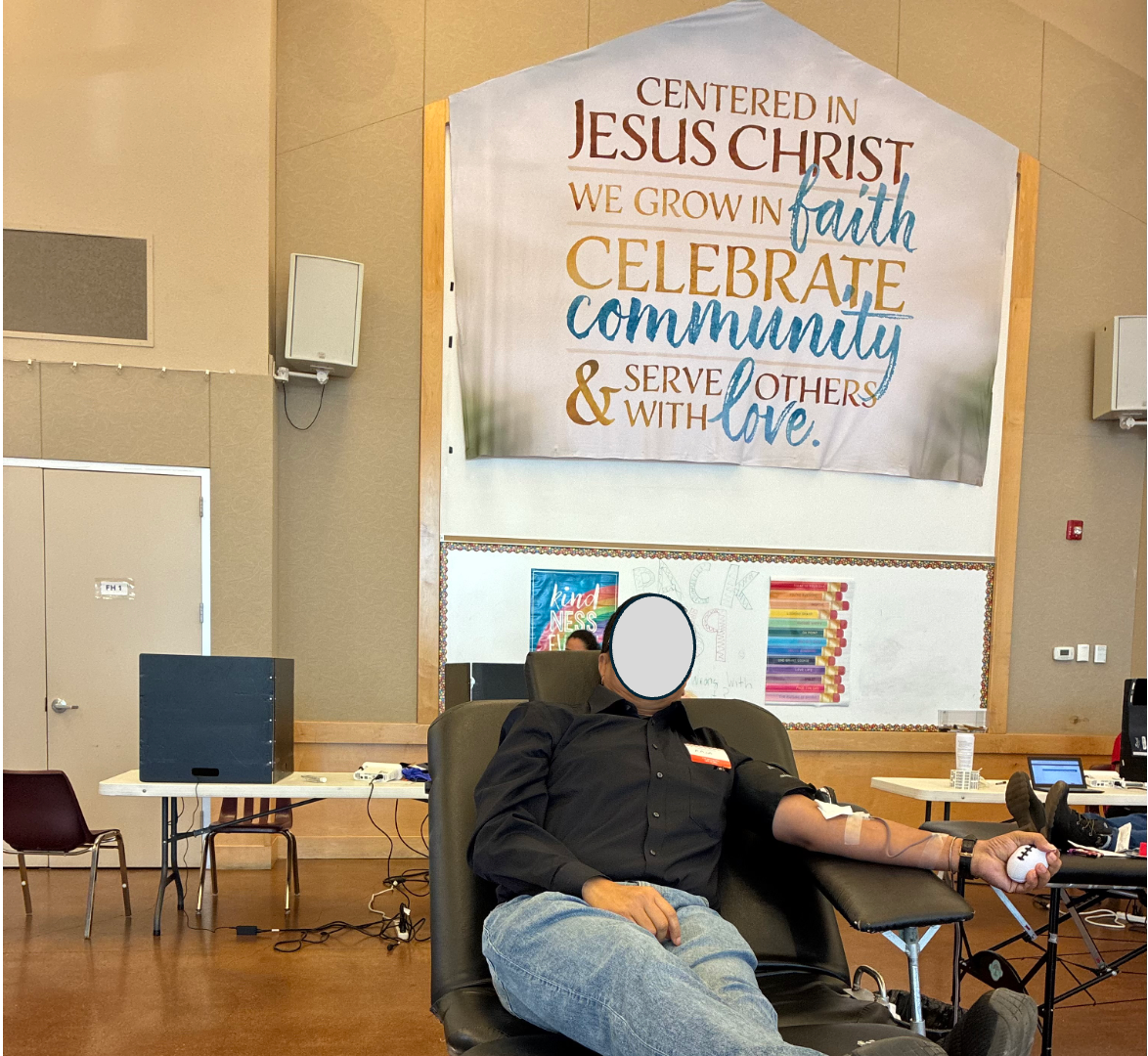
The Red Cross had set up a donation camp at a local church. After the standard checklist — travel, medications, iron levels, caffeine intake, and possibly whether I’d recently lived on Mars — I mentioned casually to the nurse:

By the way, I’m fasting today. Is that okay?

She gave me the kind of look nurses reserve for over-confident donors.
“Yes, but you might feel dizzy. You can always come back another day,” she said gently.

That was all the encouragement my inner tinkerer needed.
“Let’s try it,” I replied. “You can keep me under observation. Worst case, I pass out gracefully.”

She smiled — the professional mix of concern and amusement — and agreed to keep an eye on me.

The Outcome (Spoiler: I Survived)

Everything went smoothly.
No dizziness, no tunnel vision, no dramatic Bollywood-style faint.
I rested for ten minutes, sipped some water, and then drove home — feeling oddly light and focused.

By the time I have completed this post, I’d been fasting for around 48 hours, drinking only water. No hunger pangs, no weakness. Just a steady calm as if the body had tuned itself to a more efficient frequency.

I even managed nine rounds of Sun Salutation this morning, which might explain why the nurse kept checking if I was still upright.

What I Learned

Donating blood while fasting, at least for me, felt no different from donating on a regular day. That said, our bodies speak in different dialects and it’s wise to listen closely for signs of distress.

For me, this experience became another data point in my ongoing fasting experiment. I’ve now completed three 48-hour Ekadashi fasts in the past two months. The pattern is becoming clearer:

The busier I stay, the less I feel like eating.

Fasting, I’m realizing, isn’t about deprivation, it’s about redirection.
Energy, focus, and even curiosity seem to reboot when the digestive system takes a break.

No medical advice here, just one engineer’s continuing fascination with how the body behaves under simple constraints. This time, the “test” involved missing a few meals and donating a pint of blood.

Next up: those post October 28th blood test results. Let’s see if the system shows measurable improvement or just more interesting data.

So far, the system’s stable. No warning lights yet. Let’s stay curious and stay connected. 

A Journey to Outsmart Blood Sugar (Before It Outsmarts Me)

 An engineer’s experiment with fasting, food, and fitness sprinkled with dark humor and a dash of sugar paranoia.

A midlife engineer and lifelong foodie tries to hack his way out of blood sugar trouble, one fast, one squat, and one sarcastic thought at a time.
Experiment with FastingLet’s be honest — who doesn’t love sugar? Whether it’s the comforting sweetness of chai, a post-meal dessert, or that innocent-looking cookie that somehow disappears by the dozen, sugar is that one friend who makes everything better… until it doesn’t.

The problem is, sugar addiction is as real as it gets. The more you have it, the more your brain craves it. And giving it up? That’s no small feat. I sometimes think quitting sugar might be harder than quitting smoking or drinking — at least nobody offers you a slice of cake for refusing alcohol.

So here I am, a lifelong foodie and dessert enthusiast, trying to make peace with a hard truth: if I want to keep enjoying food without turning my bloodstream into syrup, I need to understand what’s happening inside me.

Maybe it’s my engineering background, but I like to approach these things rationally and proactively — more like a system to optimize, not a crisis to react to. I believe in data, logic, and a fair bit of curiosity. If my body’s running a complex biochemical network, I might as well treat it like one and see what tweaks improve performance. On top of this, a short call from my daughter once from her before visiting her physician to list who in our line of generations have been inflicted by this metabolic disorder.

That’s what led me down this rabbit hole: a personal experiment to understand and manage blood sugar before it manages me.

Like many folks sliding gracefully or, let’s admit it, reluctantly into their mid-50s, I’ve developed a new hobby to worry about aging. But instead of buying expensive supplements or quoting wellness influencers, I decided to do what any sensible, slightly reckless person would do and that is experiment on myself.

Before you imagine a Frankenstein setup with beakers and wires, let me clarify: I’m not a doctor, not a health guru, and certainly not offering medical advice. I’m just a curious human trying to see how long I can keep my blood sugar in check without giving up my favorite foods or my sanity.

The Fear of the Sweet Monster

I’ve always dreaded blood glucose. I don’t have diabetes (yet), but at 55+, I’ve watched too many friends fall victim to the “sweet curse.” Suddenly, their lives revolve around labels, carb counts, and saying no to gulab jamun. And it is also reasonable to say that most of them have been managing this beautifully with the right medicines and diet control.

For a lifelong foodie like me, that sounds like a culinary nightmare. If life’s worth living, it’s worth tasting, right?

My family history doesn’t exactly ease the paranoia. My late father never struggled with blood sugar until very late in life (thanks to some steroid use), while my mother has been managing diabetes for years — with the help of good old metformin.

Flirting with the Borderline

Last year’s blood test told me I’m skating on thin ice: an A1C of 5.5, sitting smugly at the edge between “normal” and “pre-diabetic.”

I’ve been a regular hiker, biker, and occasional runner (these days, running mostly means chasing Wi-Fi signals). For over 15 years, these activities have kept my numbers in check — without forcing me to say goodbye to biryani or pizza. But lately, I’ve hit a wall.

Despite my efforts, my regular morning fasting sugar floats between 85 and 100. Occasionally, I have seen it around 103 as well. Technically, under 100 is recommended, but I want to aim for the golden number — around 80. Because who doesn’t love a clean score, especially when your body’s the report card?

My Own Experience

Everything that follows — these lessons, experiments, and plans — comes from my own personal journey of trial, error, and occasional triumph.

Some are lessons I’ve learned the hard way, others are ongoing experiments that I’m still refining (or surviving). Think of them as field notes from one man’s attempt to outthink his metabolism.

I’m not promising miracles or medical breakthroughs — just honest observations and a desire to understand what truly works. My hope is that if you’ve ever stared at your blood test results with mild panic, you’ll find a bit of hope (and maybe a laugh) in what follows.

Lesson One: Exercise Is Great — Until It Isn’t

Here’s the first thing I learned: exercise works only up to a point.

If you’re in your 30s or 40s, you might outrun sugar with enough jogging and spinach smoothies. But in your 50s, especially if you’ve got a diabetic parent in the mix, the game changes.

At some point, exercise alone stops working. You plateau. Your sneakers still move, but your sugar numbers don’t. That’s when you realize that it’s not about “controlling food,” it’s about avoiding excess food.

A painful truth for foodies, yes, but denial spikes blood sugar faster than dessert.

Lesson Two: You Can’t Overstate the Power of Weight Training

My second discovery is brutally simple: incorporate weight training, especially once you cross 50. People tend to give this a passing look but of late many of us are realizing the physiological impacts behind such workouts.

I’ve learned that building muscle isn’t just for gym bros or selfie enthusiasts — it’s one of the most effective ways to lower blood glucose. Bigger muscles act like glucose sponges, soaking up sugar from your bloodstream.

It’s my personal experience that a simple set of 20 squats can drop your glucose by nearly 20 points. Thanks to my friend Naresh who initiated me in to this. Add 30 push-ups, and you can see a similar dip. The larger the muscle group you work, the more dramatic the immediate drop.

Personally, I’m not a fan of the gym (too much equipment, too many mirrors). So I’ve made peace with home workouts. My routine includes 9 rounds of Sun Salutations for flexibility first thing each day in the morning, and on alternate days, I switch between push-ups and squats.

I started with 20 reps of each at the top of every hour (which, honestly, was ambitious). These days, I’ve settled into a more sustainable rhythm — 3 sets of 15 reps, done at least three times a day. It’s simple, effective, and, most importantly, doesn’t require me to leave the house or tolerate gym music.

Lesson Three: The Dinner Deadline

My third realization is elegantly boring but incredibly powerful: eat dinner early.

Ideally, 3–5 hours before bed.

When I eat by 6:30 p.m., my fasting sugar behaves the next morning. When I push dinner to 9 p.m., my glucose throws a tantrum. Turns out, our bodies hate midnight snacks more than our dentists do.

Lesson Four: Two Meals Are Enough (Most of the Time)

I’ve recently started eating just two meals a day. It sounded impossible at first — like expecting a Bollywood movie to end in 90 minutes — but surprisingly, it feels great.

The first few days were tough. My stomach made noises that could scare a raccoon. But soon, I noticed sharper focus, better energy, and most importantly, less guilt compared to when I did eat. It’s like telling your body, “Hey, I’m the boss here.”

Lesson Five: Rediscovering Grandma’s Wisdom (and My Sense of Humor)

Now, here’s the fun part — or the fasting part, depending on your perspective.

Twice a month, I do a 24-hour water fast, usually on Ekadashi (try to find the meaning of this word on a lunar calendar), a tradition my maternal grandmother followed religiously. I used to tease her for it as a kid, joking that skipping meals was her secret way of trying to find me-time.

Now I realize she was onto something profound.

Skipping two days of meals a month means avoiding 6 out of 90 meals, giving your body about a 6.5% break from constant digestion. I’m now planning to stretch it to a 48-hour fast, doubling that to about 13% “meal-free” livingwithout compromising any routine day to day activities of work, exercise etc

It’s like giving your digestive system a weekend off — from you.

The Experiment Continues

My next annual blood test is on October 28, and I’m oddly excited. I’ll find out if these eight months of twice-monthly fasting have actually nudged my biological markers in the right direction — or if I’ve just been glorifying hunger with scientific jargon.

Either way, I’ve learned something valuable: aging doesn’t have to mean surrendering. It’s about curiosity, control, and the occasional dark humor to keep it all digestible.

I plan to continue sharing my progress or lack thereof here on Medium. My ongoing adventures (and misadventures) in taming blood sugar will unfold as honestly as possible, with all the data, doubts, and desserts that come along the way.

So if you’re curious, struggling with the same questions, or just here for the occasional sarcastic health update, keep following my journey. I promise to make the science relatable, the lessons practical, and the hunger… mildly entertaining.
Saturday, August 13, 2022

Congratulations!!


Our daughter Tanya has been awarded the fellowship for the 2022-23 Arthur Garfield Hays Civil Liberties Program at New York University in 3rd year law. Listed below is a brief profile of Tanya at NYU


Tanya Raja (she/her) is an immigrant and third-year law student who was born in India and mostly grew up in the Bay Area, California. She is passionate about advancing economic justice, immigrant rights, and racial justice. Tanya spent her 1L summer working at the New York Civil Liberties Union and interned at the National Center for Law and Economic Justice during her 2L summer. At NYU, she advocated for low-income tenants in New York City through the Legal Aid Society’s Housing Clinic. She is also a public interest co-chair of the South A

sian Law Student Association, along with a board member of Law Students for Economic Justice and the Coalition for Law & Representation. Tanya is an editor for the NYU Law Review, a Dean’s Scholar, and a member of the Rose Sheinberg Committee. She enjoys going to concerts and watching movies with low Rotten Tomatoes scores.


You motivate all of us with your hard work, dedication and passion. Keep shining!

Friday, May 21, 2021

Trail Blazer

Happy Birthday, Didi! If my memory serves me right then after a long time, we are celebrating your birthday in your absence. I have been trying to think of different gifts that you may like on your birthday but because of analysis-paralysis could not focus on one and hence writing some thoughts for you. 

Law School by itself may not be harder than other equivalent disciplines but getting into law school by scoring in 99th percentile takes some natural talent, commitment and hard work. When I told you earlier that let me also write LSAT, it was just a joke ๐Ÿ˜€. You are a trail blazer in our immediate and extended family. You are doing something that is difficult, if not impossible to do and is definitely not a beaten path. You are travelling a path less travelled especially by people having our background. Most of us likes to quickly settle and enjoy life but what the heck, you only get one life  - that everyone lives for themselves. There are very few who gets a chance to live for others. I hope you eventually become that chosen few that genuinely is of help to people less fortunate. 

 เค•ौเคจ เคฐोเคคा เคนै เค•िเคธी เค”เคฐ เค•ी เค–ाเคคिเคฐ,

เคธเคฌ เค•ो เค…เคชเคจे เคนी เค•िเคธी เคฌाเคค เคชเคฐ เคฐोเคจा เค†เคฏा |


Your decision to leave schools like Columbia, UPenn and settle for NYU law speaks about your abilities to analyze the pros and cons. At a surface level, these seems to be normal decision that many individuals take in their career but digging deeper and understanding your point of view during such decision-making made me more appreciative of your decision. I wish in your life you do not ever compromise and settle against your wish and intuition. 


When you are into doing things you may underestimate your worth or your abilities but looking from outside, I can say without hesitation that you have got some serious talent to bring change in people’s lives, if you continue to back yourself up. Talent is good to have but one needs to continually polish that talent every day to be able to use it otherwise there are 99% of the world’s population that has talents but cannot leverage it just because they are not harnessing and polishing their talent every day. Focus is invaluable!


I learnt from you the perspective of earning money vs being happy in what you do even if you earn lot less. I have hardly seen anyone in my contacts who has happily pursued the path of sacrificing money to be happy first in their career. I too was initially a bit skeptical about your goals but have now become your greatest admirer. It is good to earn money but it is far better to be able to do to pursue something that may bring some change in the lives of people that need help! You are destined to do bigger things. This strength of your character to stay focus on what you like to pursue, have the discipline to back your decision and the ability to stand by your decision gives me courage and hope to look beyond the regular life for you.


"เค†เคœ เค†เค— เคนैं, เค•เคฒ เคชाเคจी เคนो เคœाเคंเค—े,
เค†เค–िเคฐ เคฎें เคนเคฎ เคธเคฌ เค•เคนाเคจी เคนो เคœाเคंเค—े | "


We all come to this life, play our character and one day go back from where we came but there are few who are destined to blaze trails. You are already a trail blazer for me and will remain such for me, ever. Keep dreaming and keep achieving your dreams!


where ends the logic, there begins the magic

Monday, August 3, 2020

Blessings from Elders


It's an amazing coincidence that all four member of this family here in US for the first time in our life time are simultaneously employed on Aug 3, 2020. We took this picture on our dining table. The four  laptops represent the four companies that we work for. This moment was possible because all four of us are working remote due to Covid issues. The latest member to start the work is Tanvi who is starting her career today with Microsoft.

This day today was possible only because of blessings from our elders and wishes from all of you.

From BI to AI


It was just a couple of weeks back, I was speaking to Girish Pathak, my ex-colleague at Satyam & Zensar, who mentioned “From BI to AI” when he came to know that my younger daughter is joining Microsoft in the area of Cloud & Security that intersects with AI & ML.

I realized that when I started my career in Information Technology, BI was the hot and emerging 
trend in late nineties. All I used to do was eat, drink and talk BI to understand what the heck it meant and how to master it along with my ex-colleagues in erstwhile Satyam Computers.

Our daughter Tanvi recently graduated from University of Illinois, Urbana Champaign (seen here alongside her elementary school graduation pic) and is all set to join Microsoft in August. It’s just funny to think that in last 21 years the level of understanding from Dad to Daughter has evolved from BI to AI.

She is very excited to join her first job and here is wishing her the best.

Sunday, June 21, 2020

Father's Day 2020

This is the first year that Father’s day has come while my Father is no more. Though I am not a huge fan of Father’s day but the fact that my Dad passed away 6 months back still seems so surreal. The inability to call him and talk about various things flashed today soon after I got up this morning. The feeling of not ever able to talk to my Dad was accentuated when my daughters called out Happy Father’s day.

This is the letter that I received from Didi today on this occasion. She has encouraged me to write more. Will try to do that as much as I can. 

As she is slowly planning her move to New York to start her law school, the significance of this day is becoming more vivid. I feel that I should become like roots - invisible but strong; the more kids reach for glorious heights in their life, the deeper in soil should I go to support them from falling. Let’s see if I can ever do that.

This is the letter that I received from Chotu today morning. So
cute. She is correct to point out my concern about summer solstice. I like that.

She also writes about difference in opinion but what she does not know is many times I try to bring on different or contradicting views than hers to help her appreciate the other side without getting angry or overwhelmed. Life is good because of inherent contradictions and she will become a much better person (she already is) once she realizes this inherent life’s contradictions. I am proud of her the way she is evolving as a thoughtful, compassionate and mature young woman.