Part 2 of my ongoing experiments in fasting — connecting data, discipline, and a dash of curiosity.
What happens when fasting meets a blood donation drive? A small experiment in curiosity, restraint, and how the body adapts.
 In my previous story, I wrote about experimenting with fasting, exercise, and lifestyle tweaks to outsmart my blood sugar, not as a health guru, but as an engineer curious about how the body responds to small system changes.
I’m still waiting for my next set of blood tests on October 28 to see if some of those biomarkers have actually improved. But while I wait for data, another unexpected event added a fresh chapter to this ongoing exploration.
An Overlap I Didn’t Plan
It began with a scheduling coincidence. I had signed up to donate blood on October 17, only to realize later that it was also Ekadashi, my fasting day.
My first instinct was to reschedule. But then the little engineer in me whispered, why not observe what happens?
I’ve always believed that real understanding comes from first-hand data, not assumptions. So I decided to let fasting and blood donation meet — purely for the sake of curiosity.
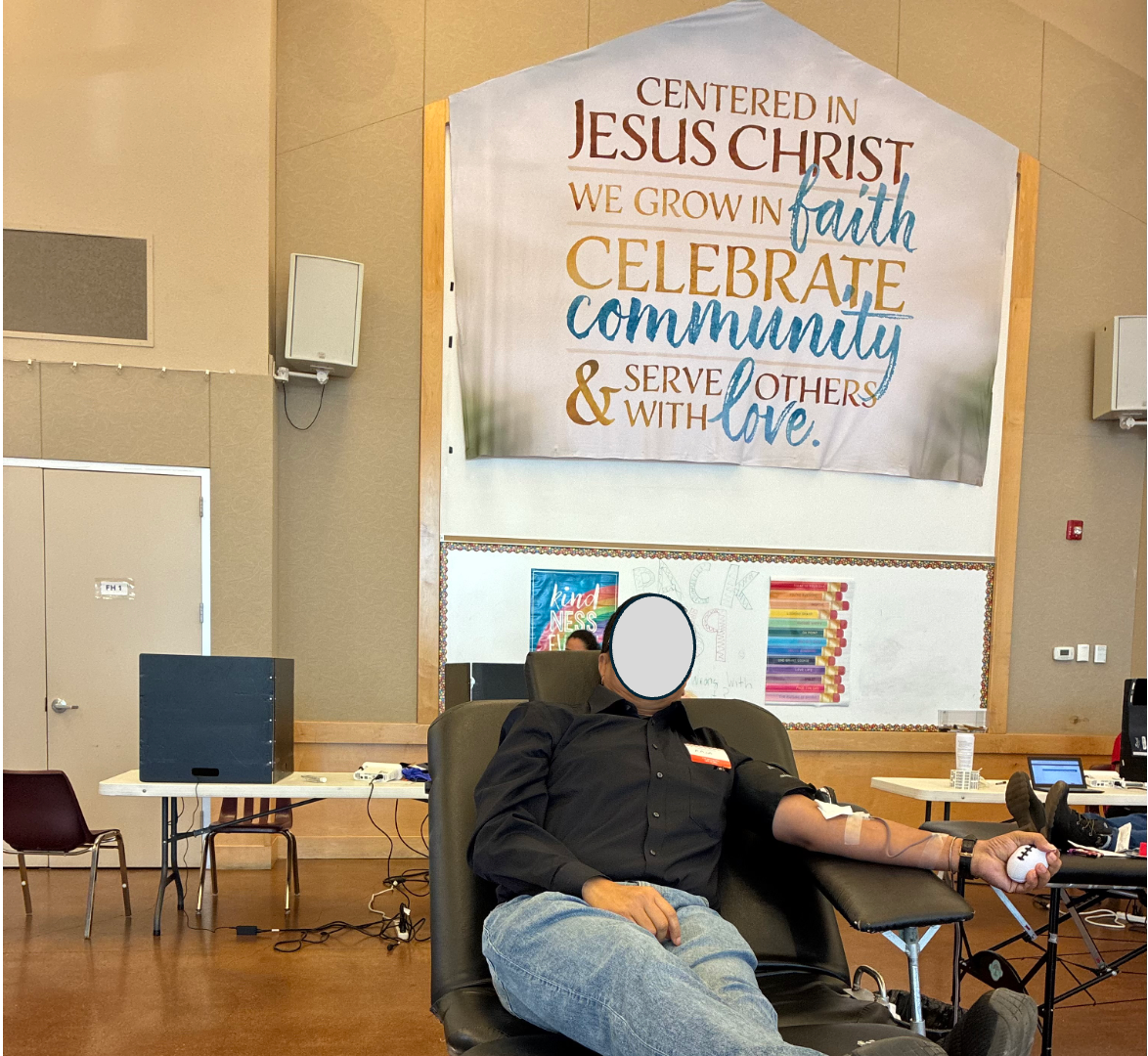
At the Church Lab (Also Known as the Blood Drive)
The Red Cross had set up a donation camp at a local church. After the standard checklist — travel, medications, iron levels, caffeine intake, and possibly whether I’d recently lived on Mars — I mentioned casually to the nurse:
“By the way, I’m fasting today. Is that okay?”
She gave me the kind of look nurses reserve for over-confident donors.
“Yes, but you might feel dizzy. You can always come back another day,” she said gently.
That was all the encouragement my inner tinkerer needed.
“Let’s try it,” I replied. “You can keep me under observation. Worst case, I pass out gracefully.”
She smiled — the professional mix of concern and amusement — and agreed to keep an eye on me.
The Outcome (Spoiler: I Survived)
Everything went smoothly.
No dizziness, no tunnel vision, no dramatic Bollywood-style faint.
I rested for ten minutes, sipped some water, and then drove home — feeling oddly light and focused.
By the time I have completed this post, I’d been fasting for around 48 hours, drinking only water. No hunger pangs, no weakness. Just a steady calm as if the body had tuned itself to a more efficient frequency.
I even managed nine rounds of Sun Salutation this morning, which might explain why the nurse kept checking if I was still upright.
What I Learned
Donating blood while fasting, at least for me, felt no different from donating on a regular day. That said, our bodies speak in different dialects and it’s wise to listen closely for signs of distress.
For me, this experience became another data point in my ongoing fasting experiment. I’ve now completed three 48-hour Ekadashi fasts in the past two months. The pattern is becoming clearer:
The busier I stay, the less I feel like eating.
Fasting, I’m realizing, isn’t about deprivation, it’s about redirection.
Energy, focus, and even curiosity seem to reboot when the digestive system takes a break.
No medical advice here, just one engineer’s continuing fascination with how the body behaves under simple constraints. This time, the “test” involved missing a few meals and donating a pint of blood.
Next up: those post October 28th blood test results. Let’s see if the system shows measurable improvement or just more interesting data.
So far, the system’s stable. No warning lights yet. Let’s stay curious and stay connected.


 Posts
Posts


No comments:
Post a Comment